


General People's Congress: 44 Years of State Legacy and Challenges to National Role
|
4 days ago
A-
A+
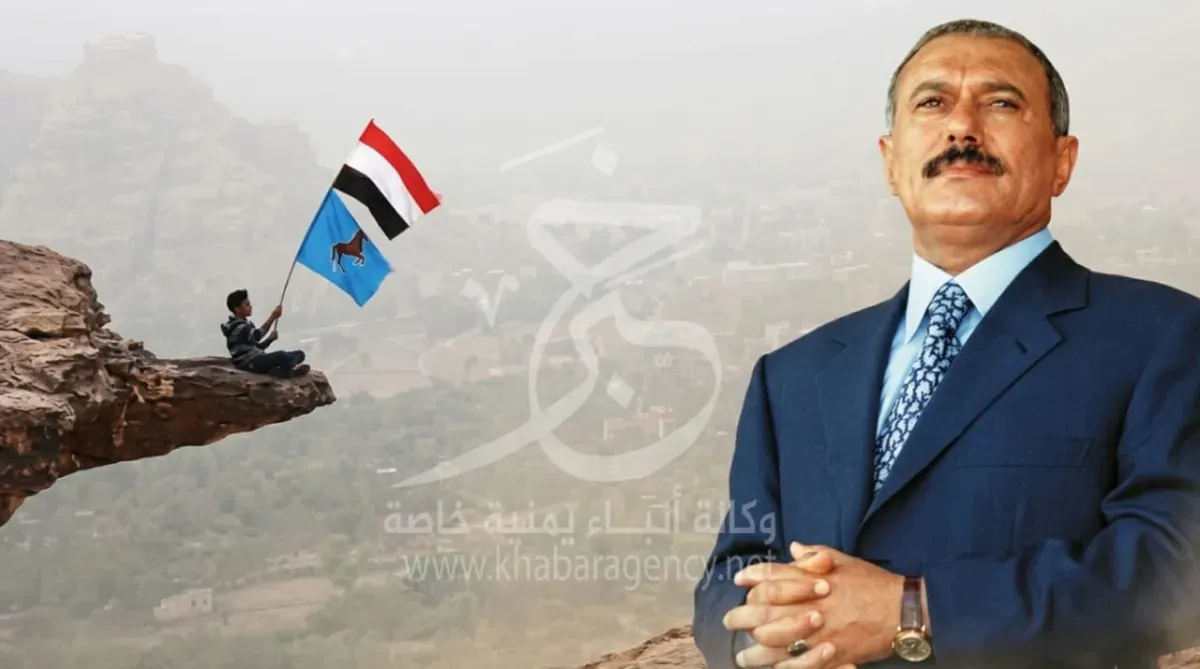
As the 44th anniversary of its founding approaches on August 24, the General People's Congress (GPC) is reflecting on its significant role in modern Yemeni political history. Established on August 24, 1982, under the leadership of President Ali Abdullah Saleh, the GPC was conceived as an inclusive political framework born from complex national circumstances, aiming to unite diverse social and political forces under a national project grounded in the principles of the National Charter, state-building, and the reinforcement of the republican system. Over more than four decades, the GPC has been intertwined with pivotal moments in Yemen's trajectory, from the construction of state institutions and the expansion of development projects to the achievement of Yemeni unification on May 22, 1990. During its leadership of the state, the party oversaw extensive projects in education, health, infrastructure, communications, and ports, alongside the transition to multi-party politics and the implementation of elections, establishing the ballot box as a key mechanism for political participation and power transition. More than just a ruling party, the GPC, due to its broad composition, evolved into a political and social umbrella encompassing various figures and currents. It navigated a long political journey marked by numerous crises, notably the events of 2011 and the subsequent political settlement that led to a power transfer in February 2012. The nation then entered a more complicated phase with the Houthi militia's coup and seizure of state institutions in September 2014. Today, the GPC faces multifaceted challenges, including the restoration of its organizational unity, consolidation of decision-making centers, renewal of its leadership, and rebuilding its popular base. It must also develop a political discourse responsive to the current phase's dynamics and demands. Critical re-evaluation of past organizational and political practices that weakened the relationship between leadership and party ranks is also necessary. This includes addressing the mentality of assumed perpetual loyalty and ensuring balanced attention to loyal cadres and members, rather than prioritizing figures from other political factions at the expense of those who remained steadfast. The GPC needs to revalidate its organizational base, appreciate its loyal cadres and supporters, and actively involve them in decision-making. Infusing new energy into its structures, empowering qualified youth, and revitalizing its core membership are crucial for internal renewal and regaining competitive political capacity, while preserving its national legacy and popular support. Overcoming divisions necessitates a critical review of past experiences. In this context, many GPC members look to Ambassador Ahmed Ali Abdullah Saleh, the party's Vice Chairman, as a figure capable of contributing to reorganizing the party and restoring its cohesion. Expectations of his political role have heightened following the lifting of UN sanctions against him. Hopes are pinned on his presence to unify ranks, reactivate party institutions, enhance communication with national forces, and open broader regional and international political channels to serve the national cause and restore state institutions. The aspirations linked to Ahmed Ali Abdullah Saleh extend beyond the GPC's organizational aspect to envisioning a broader political role for the party in the upcoming phase, given Yemen's need for forces capable of building consensus and initiating dialogue and national reconciliation. This places a responsibility on the GPC to re-present itself as a civilian political organization committed to pluralism, peaceful power transfer, and a project centered on the state, equal citizenship, and Yemen's unity and institutional integrity, leveraging its historical experience while avoiding past mistakes. On its 44th anniversary, the GPC stands at a critical political juncture. Preserving its legacy is less about recapturing the past and more about constructing a new future for the party and for Yemen. While its base anticipates a more effective role for Ahmed Ali Abdullah Saleh in reunification and regaining influence, the party's ability to overcome divisions, renew its leadership, empower its youth, heed its loyal members, and engage with national forces will be decisive factors in its future standing. In a nation exhausted by war and division, the revitalization of political parties, particularly the GPC, could serve as a vital pathway toward a decisive push to restore the state. |