


Houthi Exploitation of Mawlid: Forced Levy and Recruitment Under Religious Guise
|
1 week ago
A-
A+
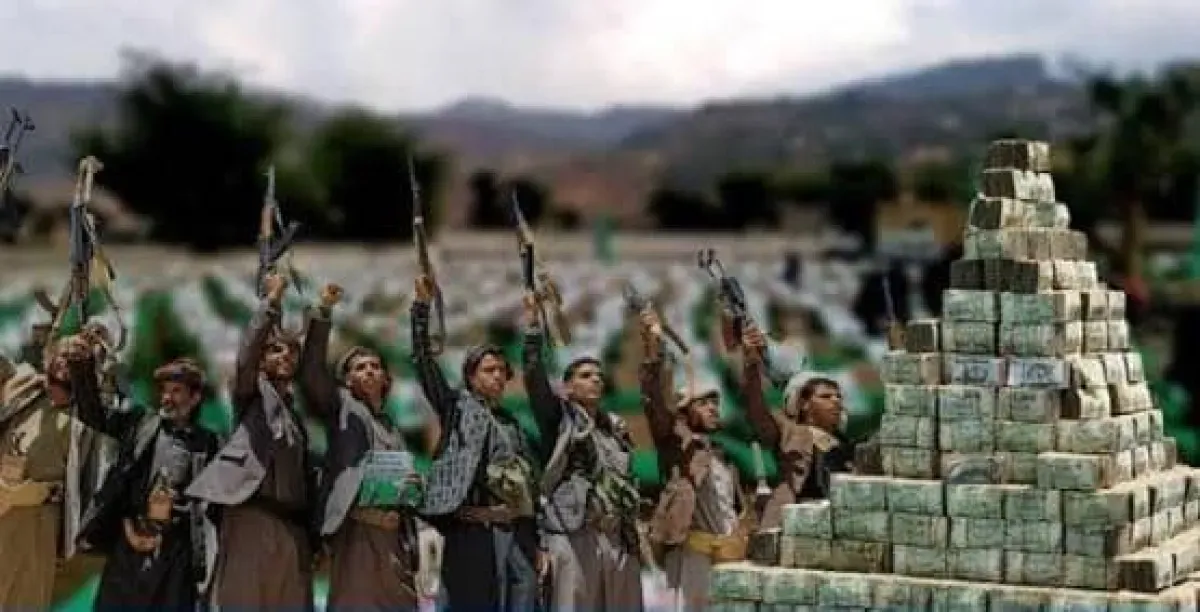
Houthi-controlled areas in Yemen are experiencing a suffocating state of mobilization, marked by streets and buildings adorned with green banners and decorations for the Prophet's birthday. However, this display masks a grim reality of coercion and intimidation, as the religious occasion has been transformed into a season for plundering the private sector and extracting mandatory financial levies amounting to hundreds of millions of riyals. More alarmingly, the event is being exploited ideologically to mobilize tribal members and children, pushing them onto active front lines amid the militia's recent military escalation across the country. Field reports from Sana'a, Ibb, and Hodeidah confirm that the Houthi militia has turned the month of Rabi' al-Awwal into a period of compulsory financial collection. These campaigns target not only major merchants and investment companies but also extend to small vendors, farmers, and even schoolchildren. The commercial sector is under the axe of "war efforts." The militia, through its field supervisors, compels business owners and institutions to purchase decorative items and green lighting at their own expense, in addition to paying mandatory "financial contributions." Merchants who object or are unable to comply face immediate penalties, including the closure of their businesses or detention on charges of hypocrisy or hostility to the religious message. These practices inevitably lead to a sharp increase in the prices of essential goods, as traders pass on the burden of levies to consumers who have been without salaries for years. The systematic collection of funds has reached schools, with educational sources in Ibb revealing official Houthi directives obliging public and private schools to collect specific sums from students, no less than 500 riyals per student, under the guise of participating in Mawlid activities. These measures have sparked widespread discontent among parents, many of whom struggle to provide basic necessities for their families. This diversion of resources for sectarian privileges occurs while millions of Yemenis suffer from hunger, and the collected funds flow into the coffers of militia leaders. In August, leaked documents caused significant outrage after the head of the Supreme Political Council, Mahdi al-Mashat, ordered the disbursement of 150 million Yemeni riyals from Mawlid revenues to close associates and sectarian figures, exposing the hollowness of religious slogans and confirming the utilitarian nature of these celebrations. The current season of levies coincides with a widespread military escalation by the militia on multiple Yemeni fronts. Recent weeks have seen intense Houthi attacks with missiles and drones targeting the port of Mokha on the west coast, the outskirts of Bayhan district in Shabwah, and fronts in Marib, Hadramaut, and Dhale. This has prompted government forces and tribes to declare a state of mobilization and launch counter-military operations to repel the attacks. This uncalculated escalation has resulted in substantial human losses for the militia among its fighters due to preemptive strikes and clashes along the front lines. Faced with this human drain, the militia has found in the intensive gatherings and activities surrounding the Prophet's birthday a golden opportunity to compensate for numerical deficiencies through mobilization rhetoric, pressure on tribal elders, and the activation of forced recruitment mechanisms. The militia is no longer content with voluntary mobilization through enticement; it has moved, under current field pressure, to direct forced recruitment, primarily targeting tribal members in densely populated provinces such as Hodeidah, Hajjah, Amran, and Sana'a. Human rights centers have documented widespread raiding and abduction campaigns by the Houthi militia targeting dozens of young men in the Al-Zuhra district of Hodeidah Governorate. Houthi patrols have set up checkpoints and raided homes in over 19 villages and communities to forcibly transport young men to rapid training camps, subsequently sending them directly to the southern front lines of the province to replace fallen fighters. The militia also exerts pressure on notables and neighborhood leaders, utilizing its supervisor system to compel them to submit lists of young men and eligible men capable of bearing arms from their areas. Uncooperative leaders face threats of dismissal, confiscation of property, or imprisonment on charges of treason and complicity. The primary victims of this mobilization system are children and adolescents. International organizations, including Human Rights Watch, report that the militia continues to exploit religious occasions and schools as platforms for indoctrinating minors and militarizing them. UN and human rights reports indicate that the Houthis are responsible for over 77% of child recruitment in Yemen, with thousands of minors, some as young as 13, being recruited. Mawlid activities are used to deliver intensive lectures after evening prayers in mosques and schools, disseminating sectarian hate speech that glorifies death and encourages boys to join the fronts without parental consent, exploiting the extreme poverty afflicting families. Despite the Houthis' iron grip, their policy of draining Yemenis' blood and wealth is beginning to face growing popular and tribal rejection. This shift was recently evident in the declaration of widespread tribal mobilization in the fronts of Mariss, Jawf, Shabwah, and Dhale, unifying their ranks to confront Houthi expansion. They emphasize that the Houthi militia poses an existential threat to the tribal social fabric by turning their sons into cannon fodder for proxy wars. The militia's continued emptying of religious occasions of their moral and spiritual content, transforming them into tools of financial and military oppression, demonstrates that the militia views Yemeni citizens solely as a source of taxes and conscripts to be forced into its perpetual conflicts, all to ensure the survival of its power and sectarian lineage. |