


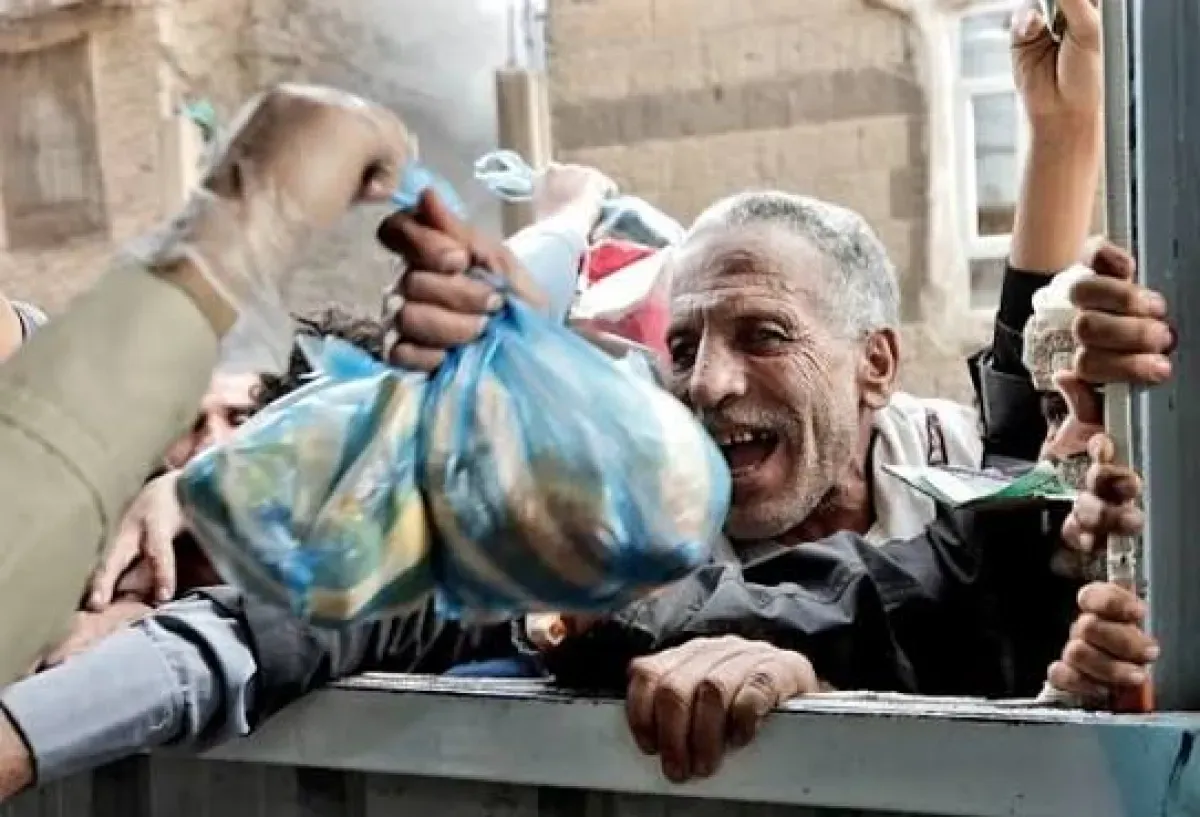
For over a decade, Yemen has endured one of the most profound economic crises in its modern history, as the conflict has transformed from a political and military struggle into an integrated economic system that has reshaped markets, governance, and wealth distribution. The collapse of state institutions and the decline of the formal economy have fostered new networks of influence that have accumulated capital and interests through illicit taxation, black markets, and control over resources and aid. Concurrently, millions of Yemenis have been plunged into poverty, hunger, and precarious living conditions. Years of conflict, war, and upheaval have driven the economy to unprecedented levels of deterioration. The national currency has lost significant value, prices for food and essential goods have soared, and opportunities for employment, production, and investment have plummeted to critical lows. Yet, amidst this collapse, a new class of beneficiaries has emerged, leveraging the war to amass substantial wealth and influence, while the average Yemeni citizen bears the cost of the conflict through their daily sustenance and their children's future. Economists argue that the most dangerous consequence of the war is not solely the destruction of the formal economy but the rise of what is termed the "war economy." This system thrives on crises, division, and monopolization, making the war itself a perpetual source of profit and power for certain factions. Before the conflict, state institutions managed a baseline level of economic activity and public services. However, following the events of 2011, which precipitated the state's collapse, and the Houthi takeover of Sana'a in 2014, leading to political and military fragmentation, the Yemeni economy entered a phase of rapid decline. This was exacerbated by prolonged interruptions in oil and gas exports, the division of the central bank and financial institutions, and a sharp drop in public revenue. During the war years, the state lost its capacity for normal market management, giving rise to parallel economic authorities aligned with territorial control. Resources and markets became instruments of power wielded by armed groups and political-military centers. The monetary division between Sana'a and Aden created a de facto "two economies" within one nation, with divergent fiscal and monetary policies, exchange rates, and banking practices, further complicating the economic crisis and burdening citizens. Experts believe this persistent division has fragmented the national economic structure, fostering an environment ripe for speculation, black markets, and informal activities, in the absence of a unified state capable of economic regulation and market protection. In Houthi-controlled areas, illicit taxation has become a hallmark of the war economy. Merchants, shop owners, market vendors, and even the poor face multiple, varied levies imposed under different pretexts. Popular markets and commercial centers are under constant pressure from these revenue-raising campaigns, with traders complaining of numerous illegal demands from multiple entities lacking effective institutional oversight. In Sana'a and other cities, traders report that the costs of these additional levies directly translate into higher prices for goods, exacerbating the suffering of citizens already grappling with a severe erosion of purchasing power. These taxes are no longer confined to major businesses but extend to street vendors and small stall owners, affecting many Yemenis struggling to secure a minimal daily income. Observers note that these levies have become a primary funding source within the war economy, especially given declining official revenues and the expanding influence of militia-linked economic networks. One of the most prominent phenomena during the war years has been the expansion of the black market, which now dictates terms in many vital sectors, from fuel and currency to food and essential goods. With Houthi control over most Yemeni governorates and the absence of state regulatory institutions, extensive networks have emerged, exploiting crises, commodity shortages, and currency fluctuations for massive profits at the expense of citizens. During these complex crises, Yemen has frequently experienced fuel shortages and sharp price hikes, while the black market unofficially controls quantities and prices, intensifying the hardship for citizens and the private sector. The monetary division has also fueled the activities of speculators and unregulated exchange networks, leading to volatile exchange rates and financial transactions that directly impact markets, prices, and living standards. Economists posit that the war has created an ideal environment for the informal economy to flourish, where chaos and division have become integral to the profit cycle for certain networks benefiting from the absence of state and law. As the humanitarian crisis escalated, Yemen became one of the world's largest arenas for humanitarian aid, with millions relying on international assistance for food, medicine, and basic necessities. However, humanitarian work has not been immune to the war's impact and political influence. International and local reports have documented interventions, restrictions, and practices affecting aid distribution in certain areas. Observers suggest that aid has often become part of a power and control dynamic, whether through controlling beneficiary lists, imposing fees, or leveraging the humanitarian file for political and media purposes. Conversely, humanitarian organizations face significant challenges related to funding, security and administrative constraints, and difficulties accessing certain regions, further complicating the humanitarian situation. With the ongoing conflict and Houthi control, millions of Yemenis live in a state of aid dependency, while opportunities for genuine development and the restoration of normal economic activity decline. During the war years, particularly since the Houthi takeover, a new class of influential business figures linked to the war economy has emerged in Yemen, accumulating substantial wealth through trade, illicit taxation, monopolies, and control over resources and markets. Economists observe that the war has unevenly redistributed wealth, concentrating capital and influence in the hands of specific groups while eroding the middle class and widening the poverty gap among the majority of the population. In many instances, political and military connections have become decisive factors in controlling economic activities and generating profits, superseding natural competition or genuine investment. Interest networks tied to the perpetuation of war and division have also become prominent, leading some factions to view peace as a direct threat to their economic gains and accumulated influence. Analysts believe that dismantling these networks will be one of the most formidable challenges for any future peace or reconstruction effort in Yemen. In contrast to the rise of the war economy, Yemeni employees have been among the most severely affected by the economic collapse, particularly due to interrupted salaries or the significant devaluation of their pay resulting from currency depreciation and price inflation. Millions of employees are now unable to provide basic necessities for their families. Many households have resorted to cutting expenses, selling assets, or seeking additional income sources for survival. This reality has also led to the deterioration of public services, the emigration of skilled professionals, and a decline in the performance of government institutions in a country where a significant portion of the population relies on public sector employment as their primary income source. In the markets, the effects of this crisis are evident in the lives of Yemenis, who face continuous price increases for food, medicine, transportation, and essential services, while their purchasing power erodes daily. Hunger in Yemen is no longer merely an emergency humanitarian crisis but a daily reality for millions of families struggling to secure a meal or access medicine and basic services. In many areas, the harsh economic conditions have pushed children into the labor market at an early age, while others have dropped out of school due to poverty, displacement, or instability. Malnutrition rates have also risen alarmingly, especially among children and women, amid the collapse of the health system, soaring food prices, and declining humanitarian support. Experts believe the most dangerous aspect of the war economy lies not only in financial losses but in its long-term social and humanitarian consequences, threatening the future of an entire generation raised in an environment of poverty, fear, and instability. Despite frequent discussions of peace and political settlements, the war continues in various forms, entangled in complex political, military, and economic factors. Observers suggest that one reason for the stalled peace process is the existence of extensive interest networks tied to the continuation of war and division, whether through illicit taxation, smuggling, black markets, or resource control. After years of conflict, war has become a perpetual source of influence and profit for certain factions, making its cessation more complicated than simply signing a political agreement or declaring a ceasefire. Therefore, economists emphasize that any genuine settlement in Yemen will be impossible without dismantling the war economy, rebuilding state institutions, and restoring an economic system based on law, transparency, and institutions. In cities, villages, and popular markets, the economic repercussions of the war are visible on the faces of Yemenis worn down by years of conflict, hunger, and livelihood collapse. Despite this, many Yemenis continue to strive for life, work, and survival in a country where the most basic daily needs represent a constant battle. However, behind this resilience lies immense suffering for millions of Yemenis who find themselves hostages to a protracted war that has created networks of wealth and influence at the expense of the poor and hungry. In a nation where politics intertwines with arms, hunger with interests, and economy with influence, the most poignant question hangs over the lives of Yemenis: When will the Houthi coup, which has turned Yemen into their private fiefdom, end, and who will stop a war that some are profiting from more than they are losing? |