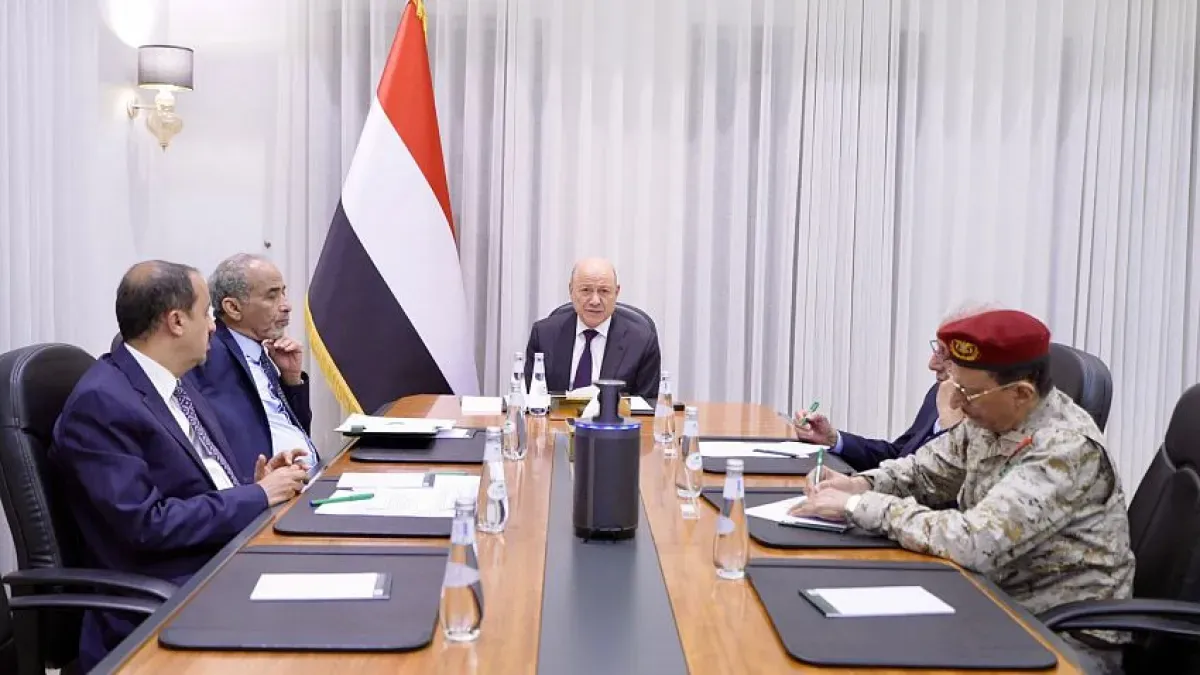



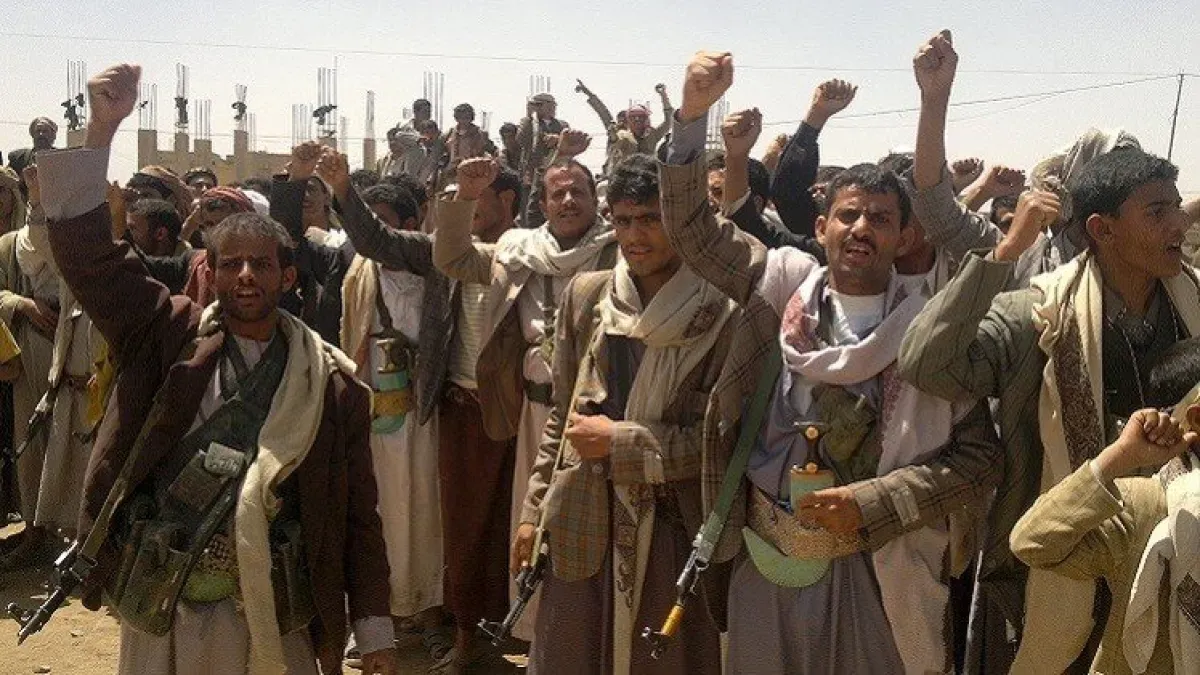
The fall of Amran province in mid-2014 was a pivotal moment in Yemen's modern history, signaling a significant shift in the nation's power dynamics and the erosion of state authority. The capture of the 310th Armored Brigade by Houthi militias exposed the fragility of Yemen's military structure and highlighted the impact of partisan pressures on official decision-making. This event effectively marked the Houthi transition from an armed group to a formidable military force with a defined ideology and external backing. At the time, the Yemeni state appeared to be managing a crisis, but behind the scenes, undeclared agreements among tribal and political factions, which influenced the government's decisions, were gradually undermining the state's ability to assert control. Amran's collapse was not sudden but the culmination of post-2011 political tensions, compromises, the weakening of military institutions, and internal military loyalties, exacerbated by elite political struggles that diminished Sana'a's decision-making power. The Houthi takeover of provincial centers and arms depots signaled a transfer of power from the state to an non-state armed actor, a moment many observers described as the beginning of the state's loss of its monopoly on violence. Amidst these developments, then-President Abd Rabbuh Mansur Hadi declared that Amran had "returned to the state's embrace," an attempt to frame the situation as a government reclamation rather than a loss. However, the reality on the ground was starkly different; Amran became a gateway for the armed group's advance towards the capital, Sana'a. This disconnect between official rhetoric and the unfolding events reflected a political confusion at the highest levels of government regarding the magnitude of the transformation underway. The loss of Amran resulted in the surrender of an entire military brigade and a strategic northern stronghold, fundamentally reshaping the country's military and political landscape. The divergence between official statements and the actual power dynamics deepened the trust deficit between the state and its citizens, reinforcing the public perception of the state's diminishing capacity to control events. Within weeks, the events in Amran served as a springboard for the Houthi advance on Sana'a. Political settlements that influenced the provincial leadership and presidential decisions led to the military collapse in Amran, emboldening the Houthi militias to expand their operations. They exploited the fragmentation within the military and the weak political response to the crisis. As political factions debated solutions, the militias rapidly advanced to the outskirts of the capital, demonstrating a near-complete transfer of power from the state to armed non-state actors. This shift was not merely military but heralded a deeper political transformation, redefining the relationship between the state and armed forces, culminating in the September 21, 2014, Peace and Partnership Agreement. Signed under UN auspices, the agreement was intended to de-escalate the escalating political and military crisis following the Houthi takeover of key state institutions in Sana'a. While formally aiming to reorganize the transitional phase and ensure broader participation, the agreement practically integrated the Houthi militias, previously considered rebels, into the official political process. This integration was crucial, moving the Houthis from an external force to an internal political actor. They gained official recognition as a political party, despite their power largely resting on military control. The Houthi transformation was not a gradual integration into state institutions but a result of power dynamics on the ground. Their expanding territorial control made them politically indispensable, prompting local and international efforts to accommodate them within a political framework. The Peace and Partnership Agreement played a pivotal role, granting them a position within the transitional authority and access to state institutions, without dismantling their military structure or fully integrating them under traditional state control. This duality—a recognized political entity and an independent military force—became a primary cause of state disintegration, undermining the state's monopoly on arms and creating an imbalanced power-sharing arrangement. Following the Peace and Partnership Agreement, the country descended into a more complex phase, marked by a gradual shift of power away from official state institutions. The state, once possessing a single decision-making center, devolved into a fragmented landscape with multiple overlapping political, military, and hybrid authorities. This led to a "non-state" reality where the state lost its monopoly on decision-making, power, and service delivery, with distinct centers of influence emerging in different regions. This era saw the rise of de facto authorities, armed factions, and the disintegration of administrative and financial structures, resulting in a de facto division of essential state functions. A stark contrast emerged in public perception between the "era of the state" and the "era of non-state." The former was characterized by a single sovereign center, public order, and economic and service stability. The latter, the current reality, is defined by multiple authorities, conflicting laws, varied governance models across regions, and daily life dictated by complex interactions with overlapping powers. For many citizens, the fundamental difference lies not just in services or the economy, but in the very concept of political security—the existence of a single, accountable state, a notion that has progressively eroded since 2014, following the collapse and fragmentation of state institutions in 2010. Amran is more than just a province lost militarily; it symbolizes the collapse of old balances, while Sana'a represents the major turning point that reshaped Yemen's political system. Between these events, a new phase in Yemen's history emerged, where the state is no longer the sole actor but has become the weakest link among multiple actors sharing territory, power, and influence. An analysis of events from Amran to the Peace and Partnership Agreement reveals a profound structural transformation in the concept of the state itself. Political declarations of Amran's return to the state and agreements aimed at partnership ultimately led to a receding state and the formation of a new reality outside its traditional frameworks. Between the era of the state and the era of non-state, Yemen remains in a precarious state of uncertainty, a situation that began with the fall of Amran, altering the political and military rules of the game and leading to the current Houthi-induced state collapse and the rise of a non-state project. |