


Humanitarian Groups Report Houthi Pressure to Divert Aid and Control Beneficiary Lists
|
5 months ago
A-
A+
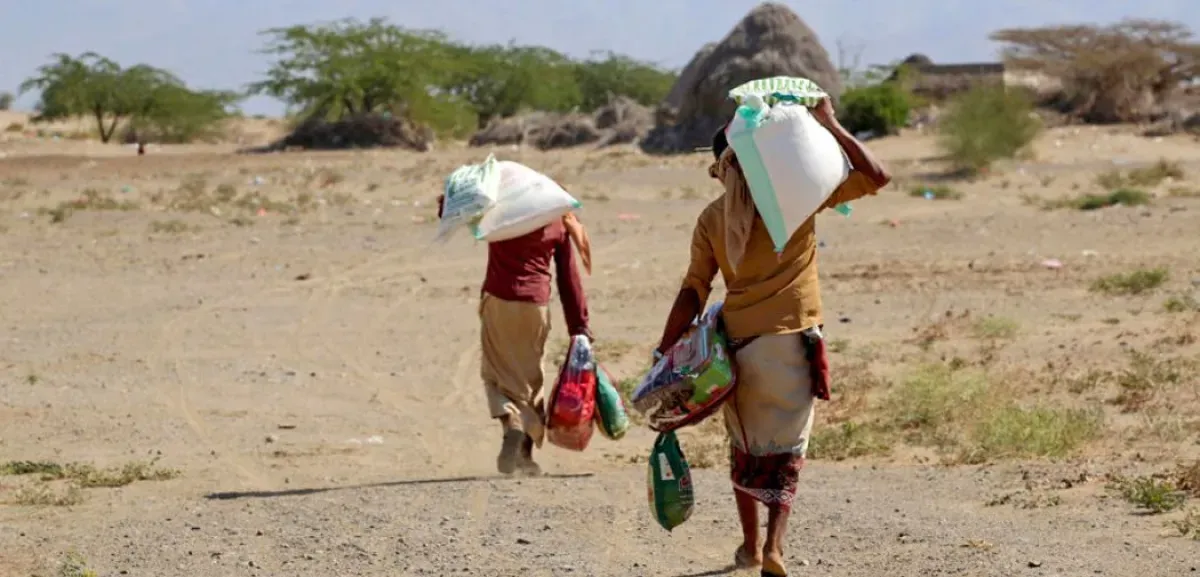
Officials from Yemeni humanitarian organizations have revealed facing direct pressure from the Houthi militia, which controls Sana'a and several northern governorates, aiming to subordinate their activities to the militia’s sectarian and military objectives. The director of a civil society organization in northern Yemen reported to BBC News Arabic that her organization lost nearly 90% of its income and was forced to lay off most of its 450 staff members after refusing Houthi demands to seize a portion of aid designated for impoverished families. The director, speaking on condition of anonymity due to security concerns, stated that 1,600 families were deprived of cash transfers when the relief campaign collapsed following a dispute over beneficiary lists. The Houthi militia seized control of Sana'a and most northern regions following its armed overthrow of the government on September 21, 2014, which precipitated the ongoing conflict between the Iran-backed Houthis and the internationally recognized government supported by the Saudi-led Arab Coalition, resulting in one of the world's most severe humanitarian crises. The director explained that an international donor approved support for 1,600 families, but local authorities demanded the reallocation of aid for 300 families to lists "of their choosing." When she requested to refer the matter to the donor, the entire campaign halted, and no family received support. She noted that her organization previously managed 13 projects focused on women and children but currently sustains only one project "with great difficulty." Testimonies from local and international organization officials cite delays in work permits, imposition of beneficiary lists, restrictions on field teams, and requirements for male escorts for female staff during aid distribution. Ahmed Al-Qurashi, the former director of the "Siyaj" organization who left the country in 2018, refused an offer to work with the Houthis in exchange for funding and a new headquarters, viewing it as making his organization a "cover for whitewashing violations," an action that subsequently led to restrictions and confiscation of the organization's assets. These pressures coincide with a decline in international funding, exacerbated by the U.S. administration's decision in early 2025 to re-designate the Houthis as a terrorist group, prompting the withdrawal of American donors. An international organization official noted that any imposed fees or taxes could expose relief activities to legal risks, adding that sanctions on financial institutions have complicated transfers and disrupted the banking system. Indicating the widening crisis, the World Food Programme announced it will conclude its decades-long operations in northern Yemen by the end of next March, having provided aid to over eight million people in 2024, while warning that 37% of Yemeni families suffered severe food deprivation by the end of 2025. Save the Children and the International Rescue Committee have also suspended operations in the North this year. The United Nations reports that 73 of its staff members are "arbitrarily detained" by the Houthi militia, some since 2021, which Under-Secretary-General for Humanitarian Affairs Tom Fletcher stated "greatly affects our operations." To mask these abuses, the Houthi militia has attempted counter-measures, accusing detained aid workers of operating under an "external agenda." In a televised address last October, militia leader Abdul-Malik al-Houthi described some organizational activities as "dangerous and aggressive," accusations that the UN has rejected. Simultaneously, high-ranking Houthi officials responsible for overseeing humanitarian affairs are publicly holding the UN and international organizations accountable for the cessation of activities, demanding they resume services—a stance that starkly contradicts their stated accusations and exposes the inconsistency of their claims. |