



Houthi Minister's Remark on Salaries Sparks Widespread Public Outcry Over Non-Payment
|
6 months ago
A-
A+
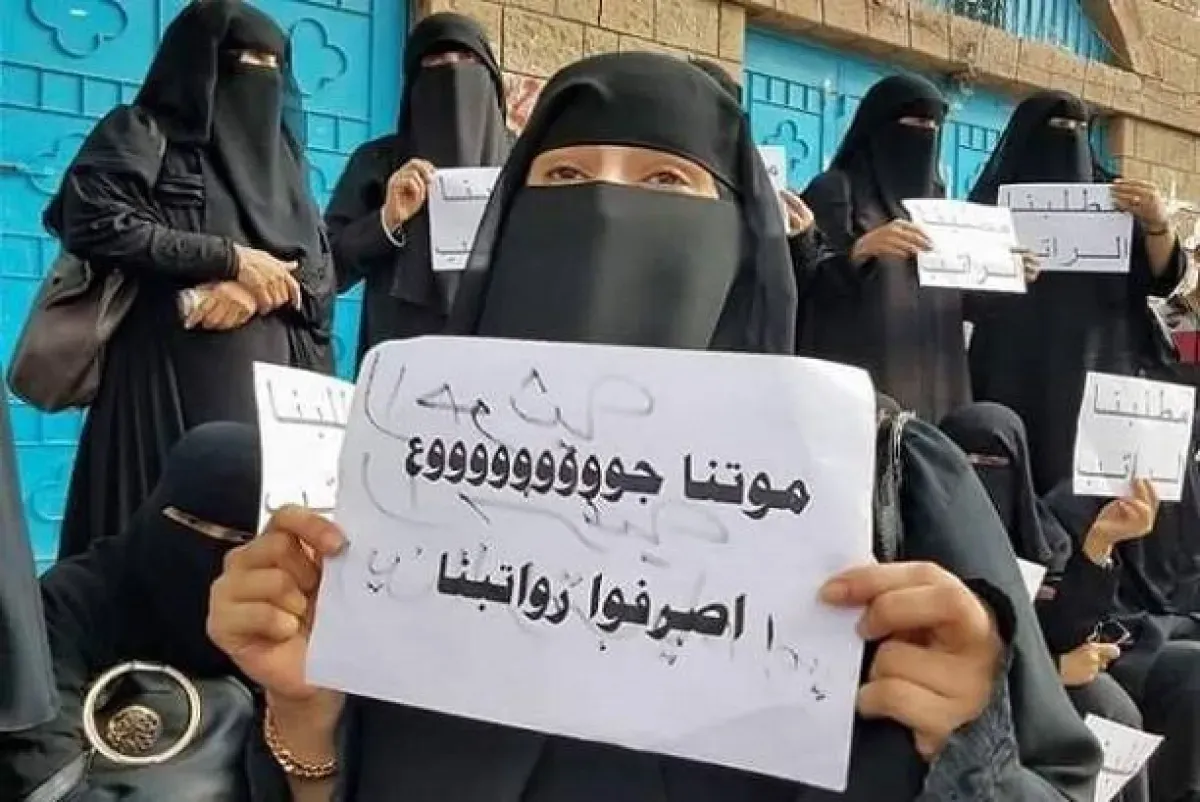
A statement from the Houthi minister of finance, asserting that "only God creates destitution" in response to demands for salary disbursement, has ignited extensive anger and resentment among public employees and the general populace, viewed as an explicit confirmation of the group's policy of evading responsibilities regarding a critical issue affecting millions of Yemenis. This declaration cannot be dismissed as a mere slip of the tongue or a casual remark; rather, it aligns with the consistent methodology employed by the Houthi militia for years. This approach centers on the systematic evasion of obligations owed to millions of civil servants, effectively shifting the burden of exorbitant taxation and wartime policies onto the victims, even as the group accrues substantial and increasing revenues from diverse sources. These revenue streams include taxes, customs duties, Zakat collections, proceeds from communications and petroleum derivatives, fees from ports and land crossings, in addition to forced levies imposed on merchants and citizens. This reality exposes a stark contradiction between the rhetoric promoting financial incapacity and the tangible financial reality confirmed by on-the-ground evidence. The statement arrives as living and humanitarian conditions deteriorate sharply in Houthi-controlled areas, where hundreds of thousands of government employees have gone without regular salaries for years, despite continuing to serve in vital sectors such as health, education, and civil service. Consequently, salaries have been transformed from a legal entitlement into a purely humanitarian demand. Observers note that the militia’s narrative of "inability" directly conflicts with the volume of revenue collected from its controlled territories. Despite this significant financial influx, salaries remain withheld, while resources are demonstrably directed toward financing militia activities and bolstering its private economy. This persistent refusal to pay salaries has evolved beyond being merely an administrative failure or a financial crisis; it has become a primary driver in deepening the humanitarian catastrophe in the areas under militia control. Thousands of families have lost their sole source of income, forcing many employees to liquidate assets, withdraw children from schools, or resort to debt and aid—a scenario reflecting a near-total collapse of social safety nets. Experts suggest the gravity of the statement lies not just in its content but in its implications: it attributes poverty and hunger to "fate" rather than acknowledging political and administrative accountability, utilizing religious discourse to rationalize policies of impoverishment and the abdication of legal and ethical commitments to employees and society. While the militia exercises strict authority in collecting levies, imposing fees, and enforcing conscription, it approaches the salary file with a logic of denial, reinforcing the image of an authority adept at extraction but failing to honor fundamental rights, managing public affairs with a wartime mentality instead of a state-centric approach. |